
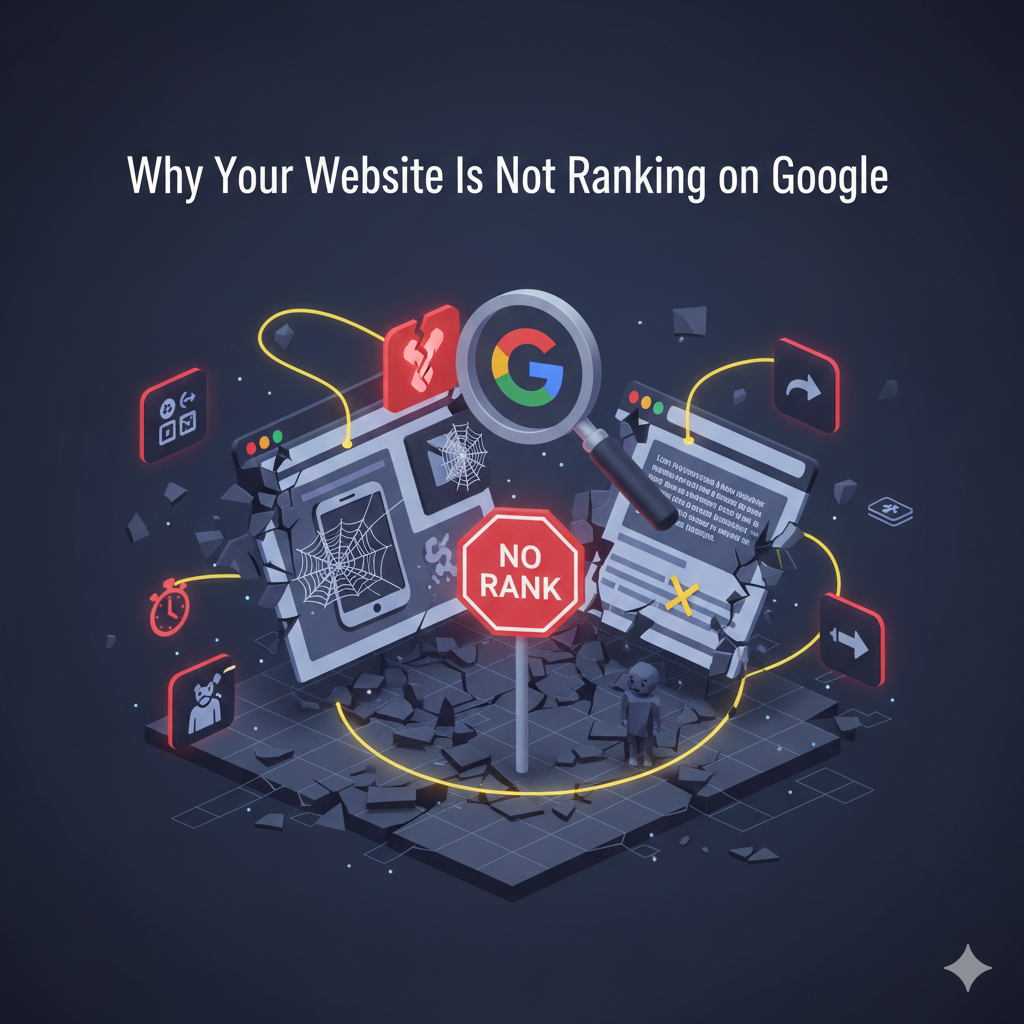
Why Your Website Is Not Ranking on Google
If you’re asking yourself Why Your Website Is Not Ranking on Google, you’re not alone. Thousands of website owners publish content every day and still struggle to appear on page one. The truth is, ranking on Google isn’t about luck—it’s about strategy, structure, and consistency.
Google’s goal is simple: deliver the most helpful and relevant result to users. If your website fails to meet that standard, it won’t rank—no matter how good it looks. Let’s break down the most common reasons and show you how to fix them step by step.
Understanding How Google Ranking Works
Google’s Search Algorithm Basics
Google uses hundreds of ranking signals, including relevance, content quality, backlinks, page speed, and user experience. These signals work together to decide where your website appears in search results.
Importance of Search Intent
If your content doesn’t match what users are searching for, Google won’t rank it. Informational searches require guides, commercial searches need comparisons, and transactional searches demand clear calls to action.
Weak or Incorrect Keyword Targeting
Choosing Keywords With No Traffic
Many sites target keywords no one is searching for. Without demand, even the best content won’t rank.
Targeting Overly Competitive Keywords
Trying to rank for keywords dominated by big brands can stall your SEO progress. Long-tail keywords often deliver faster results.
Poor Content Quality and Thin Pages
Lack of Depth and Originality
Google favors content that offers real value. Thin pages with generic advice won’t survive competitive search results.
Content Not Matching User Intent
If users expect a tutorial and land on a sales page, they’ll leave quickly—sending negative signals to Google.
On-Page SEO Issues Holding You Back
Missing Title Tags and Meta Descriptions
Search engines rely on these elements to understand your content. Missing or duplicated tags can kill visibility.
Improper Use of Headings
Headings help Google understand page structure. Every page should have one clear H1 and logically organized subheadings.
Technical SEO Problems
Slow Website Speed
Page speed directly affects rankings and user satisfaction. Tools like Google PageSpeed Insights can identify issues.
Mobile Optimization Issues
Google uses mobile-first indexing. If your site doesn’t work well on phones, rankings will suffer.
Lack of Backlinks and Authority
Why Backlinks Still Matter
Backlinks act as votes of confidence. Websites with strong, relevant links rank higher.
Low-Quality or Toxic Links
Spammy backlinks can do more harm than good. Regular link audits are essential.
Poor User Experience (UX) Signals
High Bounce Rate
If users leave quickly, Google assumes your page isn’t helpful.
Low Time on Page
Engaging content, visuals, and clear formatting help keep users on your site longer.
Google Penalties and Algorithm Updates
Manual vs Algorithmic Penalties
Violating Google’s guidelines can lead to ranking drops. Always follow ethical SEO practices.
Not Tracking or Measuring SEO Performance
Without tools like Google Search Console and Google Analytics, you’re guessing—not optimizing. Data-driven decisions always outperform assumptions.
Frequently Asked Questions
Because content alone isn’t enough. Technical SEO, backlinks, and user experience all play critical roles.
New websites can take 3–6 months or longer, depending on competition and SEO effort.
Age helps build trust, but quality and relevance matter more.
It’s possible for low-competition keywords, but backlinks significantly improve ranking potential.
Refreshing content every 3–6 months helps maintain relevance and rankings.
Yes. Even great content won’t rank if search engines can’t crawl or index your site properly.
Final Thoughts and Action Plan
Understanding Why Your Website Is Not Ranking on Google is the first step toward fixing it. Focus on keyword research, improve content quality, optimize technical SEO, build authority, and track performance consistently. SEO is a long-term investment—but when done right, the rewards are massive.