
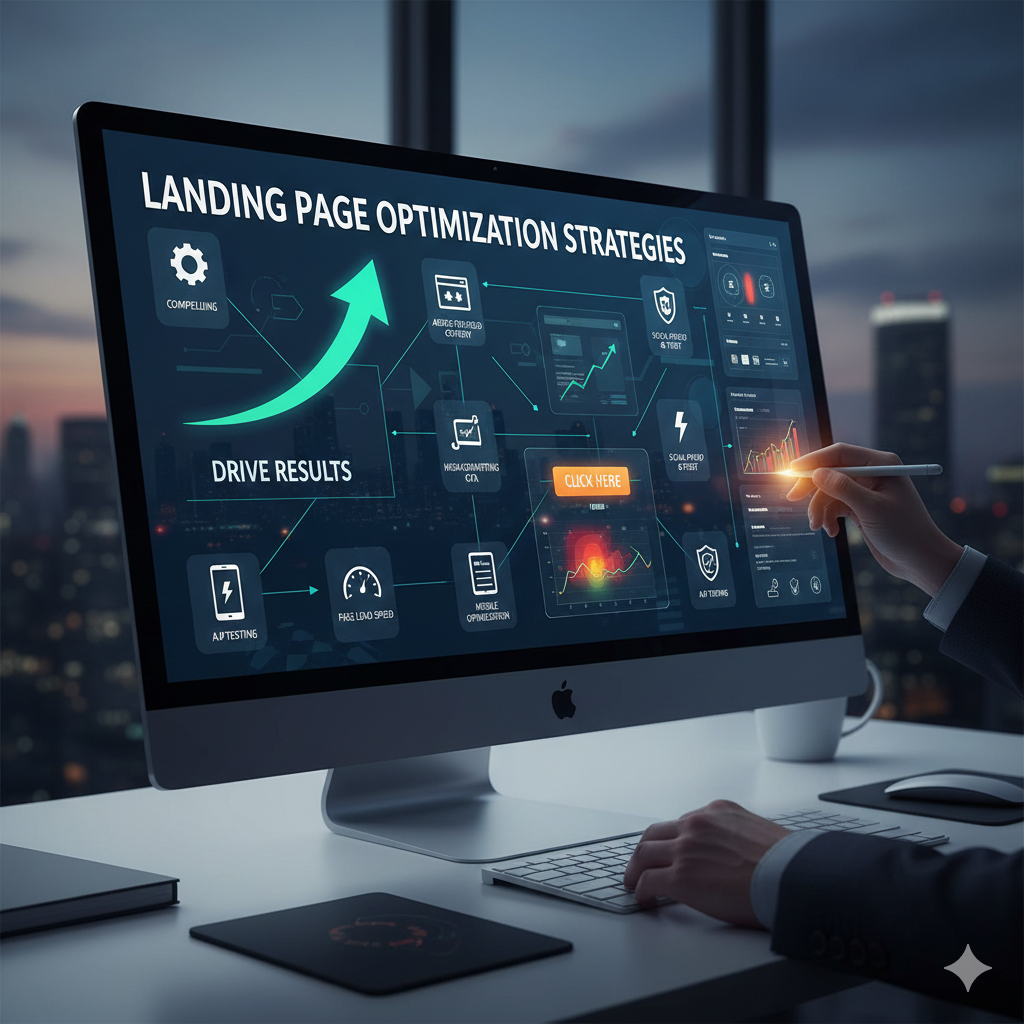
In today’s competitive digital landscape, a high-performing landing page is essential for converting visitors into customers. Whether you’re running a marketing campaign, selling products, or collecting leads, landing page optimization strategies that drive results can make the difference between a lost opportunity and skyrocketing conversions. This guide will provide actionable insights and practical strategies to ensure your landing pages maximize performance.
Understanding Landing Page Optimization
Landing page optimization is the process of improving elements on your landing page to increase the likelihood of visitors completing a desired action—whether signing up for a newsletter, downloading an ebook, or making a purchase. Unlike your homepage, which provides general information about your brand, a landing page has a focused objective: conversion.
Optimizing a landing page involves analyzing user behavior, testing design elements, refining copy, and leveraging psychological triggers to guide visitors toward the conversion goal. Proper optimization not only increases conversion rates but also enhances user experience, builds trust, and reduces bounce rates.
Why Landing Pages Are Crucial for Business Growth
Landing pages act as conversion engines for digital marketing campaigns. They target specific audiences with tailored messages and are designed to funnel visitors into the next stage of your sales process. Businesses that invest in landing page optimization see higher lead quality, better ROI on ad spend, and improved brand credibility. Unlike a generic website homepage, an optimized landing page addresses the visitor’s intent directly, which can significantly boost conversions.
Key Metrics to Measure Landing Page Performance
To ensure your landing pages are effective, monitor these essential metrics:
- Conversion Rate – The percentage of visitors completing the desired action.
- Bounce Rate – Visitors leaving without interacting indicate poor engagement.
- Click-Through Rate (CTR) – Effectiveness of your CTA buttons.
- Average Session Duration – How long visitors engage with your page content.
- A/B Testing Results – Comparing variations of your landing page to identify the best-performing version.
Tools to Track Landing Page Success
- Google Analytics: Track visitor behavior and conversion funnels.
- Hotjar: Visualize user interactions with heatmaps.
- Crazy Egg: Record sessions and identify areas of improvement.
- SEMrush: Analyze competitor landing pages and benchmark performance.
Top Landing Page Optimization Strategies That Drive Results
Optimizing a landing page requires a holistic approach that combines design, content, and analytics. Here are the most effective strategies:
Strategy 1 – Crafting Compelling Headlines
Your headline is the first thing visitors notice. It should be clear, benefit-driven, and encourage action. Use numbers, strong adjectives, and emotional triggers to make it irresistible. For example, “Boost Your Conversions by 50% With These Simple Landing Page Hacks.”
Strategy 2 – Optimizing Above-the-Fold Content
Above-the-fold content is the section visible without scrolling. Ensure it communicates value instantly and includes a prominent CTA. Keep text concise, use bullet points, and support it with engaging visuals.
Strategy 3 – Designing High-Converting CTAs
Your Call-to-Action (CTA) should be eye-catching, actionable, and aligned with your goal. Consider:
- Using contrasting colors for visibility
- Actionable wording like “Get Started Today” or “Download Free Guide”
- Creating urgency with phrases like “Limited Offer”
Strategy 4 – Enhancing Page Load Speed
Slow-loading pages are a major conversion killer. Optimize images, leverage browser caching, and use a Content Delivery Network (CDN) to improve speed. Google PageSpeed Insights can help identify performance issues.
Strategy 5 – Mobile Optimization
More than 60% of web traffic comes from mobile devices. Ensure your landing page is responsive, loads quickly, and has easily tappable buttons. Accelerated Mobile Pages (AMP) can further boost mobile performance.
Strategy 6 – Using Social Proof and Trust Signals
People trust reviews, testimonials, and certifications. Adding logos of clients, user ratings, or security badges can improve credibility and increase conversion rates.
Strategy 7 – Minimalistic and Clean Design
Cluttered pages confuse visitors. A clean, minimal design focuses attention on your CTA. Limit the number of links, use whitespace strategically, and maintain consistent branding.
Strategy 8 – A/B Testing and Continuous Improvement
Test headlines, images, CTAs, and layouts to identify what works best. Use data-driven insights to make continuous improvements. Optimization is an ongoing process, not a one-time task.
Common Landing Page Mistakes to Avoid
- Overloaded content that overwhelms visitors
- Slow page loading
- Weak or missing CTAs
- Irrelevant copy that doesn’t match user intent
- Poor mobile usability
- Ignoring analytics and testing
Case Studies: Successful Landing Page Optimization Examples
- Airbnb: Increased bookings by simplifying forms and adding trust badges.
- Shopify: Used social proof and concise copy to boost free trial signups.
- HubSpot: Leveraged A/B testing to optimize CTAs, increasing conversions by 30%.
FAQ
It’s the process of improving landing page elements to maximize conversions, reduce bounce rates, and enhance user experience.
Focus on clarity and brevity. The ideal length balances enough information to convince visitors without overwhelming them.
A homepage provides general brand information, while a landing page targets a specific campaign or goal with one clear CTA.
Use clear, action-oriented language, contrasting colors, and placement above-the-fold for maximum impact.
Over half of web traffic is mobile; a non-optimized page can reduce conversions and harm SEO rankings.
Continuously. A/B testing should be ongoing to refine copy, design, and CTA performance for optimal results.
Conclusion
Implementing landing page optimization strategies that drive results is essential for businesses aiming to boost conversions, improve user experience, and maximize marketing ROI. From compelling headlines to mobile-friendly designs, trust signals, and continuous A/B testing, each strategy contributes to a high-performing landing page. Start testing these strategies today to turn more visitors into loyal customers.